
 Images courtesy of the artist
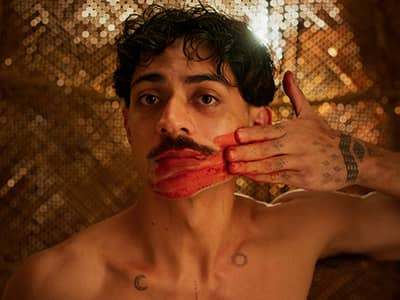
For Ten Days on the Island this year, Tasdance presents the choreographic work of two indigenous artists, Gail Mabo (KELP) and Sthan Kabar-Louët (Le Burceau Des Esprits or The Cradle of the Spirits). New Caledonian Kabar-Louët’s work is shaped by his French training as well as his Pacific Island heritage, while Mabo weaves together traditions of her Torres Strait Island culture with elements of contemporary dance and also traditional Aboriginal dance. The result is a double bill of works describing the choreographers’ diverse cultural and artistic influences.
In both works, the dancers’ bodies sometimes strain against their trained and habitual patterns of movement. The tangible discomfort perhaps reflects the limitations implicit in creating new cross-cultural works. While frustrating, the tension is also intriguing, making an audience envy the conversations (both physical and intellectual) which must have taken place during the development; discussions about the varying assumptions behind the dance traditions of the various cultures.
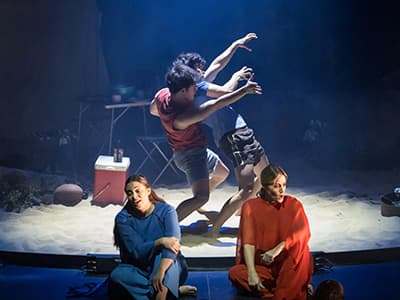
As well as melding cultural influences, both works offer central juxtapositions. In KELP, the narrative is one of a fluid underwater existence, yet the work itself is constructed of strong, bold movements. The solidity in the four dancers’ energy contrasts with the delicate lighting and soundscape. The design highlight is Mabo’s exquisite set of headdresses, which marry the bold and the fluid. They curve around the dancers’ faces, twitch with their movements, and convey the entrancingly alien imagery of a sub-aquatic world.
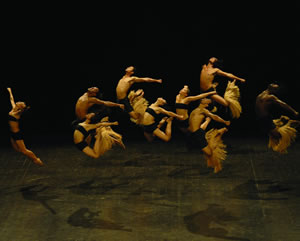
In Kabar-Louët’s work, the central contrast is between the human and less-human. At times the dancers embody amphibians or avian creatures, and various precisely formed but unrecognisable animals. At other times they express a strong human tribal identity. While the movement styles differ, the transitions between them highlight a similarity of collective presence, regardless of whether the group is animal, human, or somewhere between.
A problem in this work is the lack of overall cohesiveness. There are several false endings, complete with blackouts, soundtrack silences, and rearrangements of cast on stage. This awkwardness in structure makes the work perplexing as a whole, and also detracts from the intentional breaks and silences. These intentional silences make the audience intensely aware of the sound of the dancers’ breath, and thus the fundamental physicality of the work.
While at times the movement could have been cleaner and tighter (particularly in the early sections of both works), the dancers work with a strong energetic commitment. Joel Corpuz in Le Burceau Des Esprits is particularly powerful, in an interlude which embeds a narrative of individualism into the work’s broader mythical sections. This choreography for this solo is infused with a passionate desperation which Corpuz communicates with elegance. Staying within the constrained space of a single spotlight, he matches the vigour of the whole chorus in their more forceful moments.
The two works complement each other thematically, with each exploring an indigenous experience of the non-human and the environmental. It is almost a pity for them to share a bill, as Kabar-Louët’s work, in its length and frenetic energy, threatens to overwhelm Mabo’s shorter, more intimate and contemplative piece.
Ten Days on the Island and Tasdance presents
TASDANCE & KARBAL NOUMÉA BALLET
Venue: Earl Arts Centre, 10 Earl Street, Launceston
Dates/Times: Friday 3 April at 6pm, Saturday 4 April at 11am
Duration: 1 hour 20 mins (interval)
Tickets: $20, Concession $18
Online Bookings: www.tendaysontheisland.com
Anica Boulanger-Mashberg is a Hobart-based performer and writer.
This review is part of arts@work’s Critical Acclaim program, designed to increase critical analysis of the arts.